An appropriate faucet does greater than supply water. It sets the tone for the area, structures the sink, and telegraphs treatment whenever a guest washes a glass or a chef rinses basil. When the setup matches the top quality of the fixture, you fail to remember the mechanics and appreciate the convenience. When it doesn't, you notice drips, clunks, bending, and the creeping fear of a closet flooring going soft. I have actually installed taps across condominiums, skyscraper pied-à-terres, and rambling nation kitchen areas with antique rock containers. The very same risks turn up almost everywhere. Avoiding them is much less concerning fancy devices and more regarding technique, sequencing, and regard for the materials.
What adheres to are the 9 mistakes I see frequently, what they set you back, and just how to guide around them. If you prefer to hand the work to a pro, you will know precisely what to ask and what to evaluate. If you appreciate the satisfaction of doing it yourself, you will certainly have a clear path that maintains the surface spotless and the plumbing bone-dry.
Why these errors obtain expensive
Water has a skill for locating weak points. A pinhole drip at a ferrule can soak the side of a cupboard over months, swelling particleboard and wicking into toe kicks. An over-tightened nut can break a ceramic sink, and that swap turns a small work into a complete vanity substitute. A misaligned countered can place your aerated stream behind the drainpipe, spraying the back wall surface and detecting refined stone. I have actually seen tap installments that looked remarkable on the first day, only to create a $4,000 cabinet repair a year later on. The margin in between perfect and problematic beings in small information: string prep, assistance, alignment, and patience.
Mistake 1: Selecting a faucet that does not match the sink and counter
The look may attract you, however geometry decides whether a tap acts well. I ask three concerns before I also open up package. How many openings are in the counter or sink. What is the deck density. Where will the water land in the basin.
Holes initially. If your counter has a single opening and the tap you like demands three, you are dating a slab replacement. You can use an escutcheon to cover added openings, yet it changes the visual language. On some rock, an escutcheon reads like a plaster. In Victorian bathrooms with pedestal sinks, you may have three pre-drilled holes at 8 inches on facility. Because case, a prevalent tap fits, while a single-hole monoblock would certainly need a new sink.
Deck thickness matters as long as anything. Several high-arc cooking area taps presume an optimum deck thickness of concerning 2 inches. Yet marble with plywood subtop plus a solid brass sink rail can push you past that. If the shank can not get to the installing nut strings, you end up improvisating with washers and prayer. Better to inspect the requirements sheet. A good producer publishes a thickness range. When the deck is too slim, the faucet can flex with use unless you include a stabilizer plate or backing block.
Finally, the spout reach. You want the stream to fall about over the drainpipe, or slightly ahead if the basin dashes. Shallow shower room basins with high, straight spouts provide dramatization, and also mineral freckles up your mirror. Procedure. From the center of the mounting hole to the center of the drainpipe, after that contrast that to the spout's get to on the specification. In an undermount sink set back from the side, a brief spout will certainly require you to reach uncomfortably, and you will certainly really feel that every morning while brushing your teeth.
A brief story. A client enjoyed a slim Italian wall-mount for a washroom covered in Venetian plaster. The spout reach was 7 inches. The stone basin rested happy with the wall by 4 inches. I buffooned it up with a gauging tape and a stable hand. The stream would have clipped the leading edge with any kind of actual circulation. We rotated to a 9 inch reach, exact same collection. The plaster stayed spotless, and the faucet felt designed for the space rather than pushed into it.
Mistake 2: Skipping shutoff and pressure checks
I have actually found out never to rely on a shutoff valve's honor. Also if it looks new, verify. Shut the angle stop under the sink, open the faucet, and see if water stops fully. If the circulation reduces yet never ever passes away, the seat inside the valve is worn away. Replace the angle quit before beginning. Relying upon Wilsonville faucet repair and installation primary shutoffs on a multi-unit flooring can turn a one-hour work into a structure summit.
Pressure issues as well. Pull out a simple scale and test a hose pipe bib or the laundry supply. Ideal domestic stress relaxes 50 to 60 psi. I have actually seen 85 psi in a brownstone with a newly enthusiastic booster pump. At those degrees, cartridge seals in lots of faucets whistle, thump, and age in pet years. Set up a pressure-reducing shutoff at the major if required. In the kitchen area, peek at the supply lines. If they kink as you relocate the old tap, change them. Stainless braided lines set you back little bit, but they are the seat belts of Faucet Installation. Skimp below, and the most sophisticated tap trips on borrowed time.
Mistake 3: Ignoring placement and support
Most monoblock taps depend upon one central shank, a horseshoe bracket, and a nut. That tiny clamp withstands every bar press, sprayhead tug, and casual arm joint. On a slim stainless sink, that motion telegraphs as a wobble and a hollow ring. You can fix this with two improvements. First, make use of the supplier's rubber and metal washing machines in the appropriate order, rubber against the sink or counter. This paddings micro-movement and protects the coating. Second, add a stabilizer plate under the sink if the steel is thin or the cutout is extra-large. I once retrofitted a chef's loft space where the previous installer tightened the nut till the sink warped a little. The tap looked upright yet sang a boring note when you tapped the deck. A stabilizer spread out the tons and brought the tone back to solid.
Alignment is not aesthetic fussing. A faucet that rests a few levels off square will promote its flaw every single time you walk right into the space. Stand back before last tightening. Sight along the counter edge and mirror the faucet body to a regular reference line. If you focus to the drain rather than the hole, you run the risk of a crooked escutcheon or manipulated deals with on widespread sets. The last eighth turn on the mounting nut collections this placement. If you pass it, back off totally and reset. Compeling half actions splits rubber and gouges finishes.
Mistake 4: Cross-threading, over-tightening, and the physical violence of tools
Brass is soft. Threads are exact. Cross-thread a supply link and you might not see the damage till it leaks under pressure. Beginning every threaded union by hand. If you require a wrench to begin, something is wrong. When you do reach for devices, select the appropriate ones. A deep outlet for mounting nuts gives you manage. A crows-foot on an expansion gets to behind basins without scraping. Tape pliers with painter's tape before they touch a visible part.
Torque is a judgment you make over time. The risk-free concept is strong, then a whisper much more. For compression installations on soft copper, the ferrule does the securing. Over-tighten, and you slice the tubes. On threaded shanks with rubber gaskets, keep in mind that rubber behaves like a spring. It will rebound a little after you quit. I such as to tighten, wait a minute, then offer it a final partial turn. This avoids the see-saw tightening up cycle that fatigues components. If you fracture a porcelain sink with a passionate wrench, there is no classy recovery.
Mistake 5: Using the wrong sealers, or the right ones in the wrong place
Thread sealant has a simple mission, however it commonly gets conscripted right into the wrong battles. Teflon tape belongs on tapered pipeline threads that secure by interference, such as NPT. It does not belong on straight threads that secure with a gasket, such as a lot of faucet supply links. Cover tape on straight strings and you welcome leakages by avoiding the gasket from completely seating. Worse, stray tape shreds can take a trip into cartridges and aerators, creating irregular flow.
On NPT threads, cover the tape clockwise as the suitable faces you, 3 to four turns. Press it into the threads with your thumb. For unions where you like paste, utilize a non-hardening substance rated for drinkable water. Some sealants strike rubber; inspect the label. Never ever secure a compression ferrule with tape or paste. It jeopardizes the compression and provides a false sense of security.
Around the tap base, forget silicone unless the maker instructs it. The majority of premium taps consist of a slim foam or rubber gasket. It keeps water from wicking under the base without gluing the faucet to the deck. Silicone makes future service unpleasant and, when used haphazardly, telegrams as a glossy smear against matte stone. If you require a grain in a busy kitchen where spray is consistent, mask carefully and run the thinnest feasible joint, then draw the tape right away for a crisp line.
Mistake 6: Neglecting water quality and skipping a flush
New plumbing stirs particles. Tiny solder rounds, grit from rock cutting, also a sliver of old Teflon tape, will certainly attempt to lodge in the brand-new faucet's cartridge or check valve. If you open the supply and go directly to complete flow with the aerator, anticipate a sputter and after that an irreversible decrease in performance. I eliminate the aerator or the sprayhead and run the hot and cold lines individually for 30 to 60 seconds each. I hold a white towel by the stream. If the towel shows peppered specks, I keep purging till the water runs clean.
Where water hardness sits over 10 grains per gallon, I talk with customers concerning prevention, not treat. High-calcium water etches glass and cakes up on cartridges. You can install a whole-home softener or a point-of-use system, relying on space and taste. For a kitchen area, an easy inline debris filter upstream of the tap's products includes a layer of insurance policy, particularly when paired with an immediate warm or a filtered water side faucet. It extends the life of the tap's inner valves and preserves the silk-smooth handle movement you paid for.
Mistake 7: Sloppy hose management on pull-down and pull-out faucets
Pull-down spray taps add cinema to a kitchen area, yet they additionally add moving components that demand thoughtful directing. One of the most usual complaint after a brand-new install is a sprayhead that rejects to pull back completely. Criticize rubbing and interference. Under the sink, the spray pipe should hang in a gentle loop, without sharp bends and free from the garbage disposal, water filter cartridges, and cleaning baskets. The counterweight needs a straight path to do its work.
I like to stage this before final firm. With the faucet freely dealt with, I go down the hose pipe and move a flashlight under the sink. I pull the sprayhead out and allow it pull back numerous times while expecting grabs. If the hose pipe kisses the disposal body, I slide a basic hose guide onto the cupboard wall or zip-tie a loophole to guide the path. The weight belongs listed below the middle of the pipe's hanging arc, not limited to the base of the faucet. If the cabinet is crowded, take into consideration a portable disposal or relocate a water filter bracket. You would certainly be surprised how much a two-inch relocation can change the feel.
One much more subtlety. Some high-end faucets ship with braided stainless hose that really feels significant, but it can abrade timber edges if it scrubs regularly. A length of soft split tubing where the hose pipe passes a cabinet edge silences this and secures the finish.
Mistake 8: Neglecting support blocks and gain access to for wall-mounts
Wall-mounted faucets earn their keep over deep vessel sinks and stone troughs. The installation looks effortless when done right. Behind the tile, it can be anything however. The shutoff body needs rigid assistance. If it floats between studs, even a fraction of an inch of play comes to be a noticeable bounce when you open the deals with. Worse, micro-movement tiredness solder joints. I fix 2x blocking in between studs, after that include a cross support where the shutoff will sit. The valve body must screw right into wood at all 4 factors, level and focused, with deepness set by the trim's spec range.
Depth is the illusionist's key. Various tile densities and mortar beds can shift the ended up wall surface by half an inch or even more. Go for the center of the producer's allowed depth range, which commonly provides you a resistance home window of concerning 3/8 inch. A customer when demanded a handmade zellige tile with dynamic variation. Stunning, however bumpy. We dry-laid two rows to gauge the ordinary thickness, then set the shutoff appropriately. The trim took place without shims, and the rough-in never ever betrayed itself.
Plan for future service. Some shutoffs enable cartridge replacement from the front. Others require side gain access to. If the latter, frame an accessibility panel on the opposite side of the wall, probably in a closet. A discreet door costs little and spares you from opening up tile later for a simple repair.
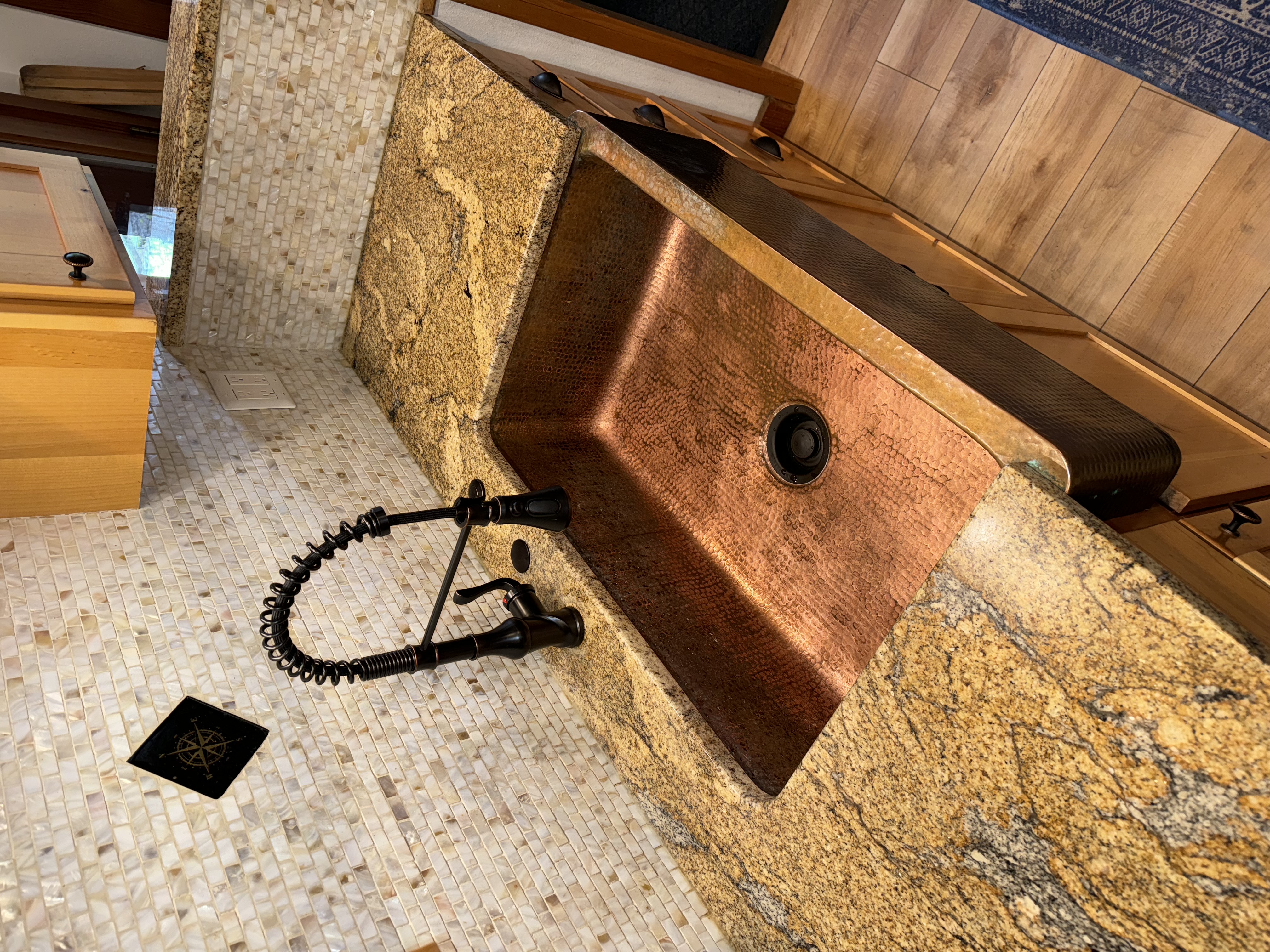
Mistake 9: Rushing the examination, skipping the last five percent
The last stage Faucet Installation Service in West Linn chooses whether the mount keeps quiet or begins a countdown. Need to state triumph the moment water flows is strong. Hold back, and do a ritual.
Dry every joint and the cabinet floor with a towel. Activate supplies a quarter turn. See the joints. Touch them with the rear of your fingers, which is a lot more delicate than your palm. If dry, open another quarter turn. Only then bring the valves to complete. Move the tap through its full range, left and right, up and down. On pull-downs, pull the pipe to maximum extension and hold for a moment. If a joint will weep, it frequently does so under stress. Check for sweating around compression ferrules, specifically on old copper that might be somewhat out of round. If you see a shadow, loosen the nut, reset the ferrule, and retighten with poise, not force.
Run warm, then cold, then mixed, for a minimum of 2 minutes each. Listen. Water hammer sounds like a thump when the handle closes. If existing, add arrestors. The little spring-loaded chambers set up at the angle stops and tame pressure spikes that can bruise cartridges.
Finally, run your hand around the tap base. Despite having a gasket, a splash-happy family members can drive water under the escutcheon. If you really feel moisture, lift and completely dry, after that reseat. Offer the installment a last visual audit. Does the deal with quit precisely at the index marks. Does the spout center where you intended. Does the spray pattern look even, without a rogue jet. If not, remove the aerator and wash once again. Perseverance below buys years of silent service.
A note on coatings and their care
Luxury faucets gain their charm from metals and coverings that are entitled to care at installation. Sleek nickel, for instance, warms and grows with time, yet it damages conveniently. I put down a thick towel in the sink, wrap the spout in a soft cloth while taking care of, and never ever established components on rock. On unlacquered brass, finger prints during mount entered into the very first patina. Some clients love the lived appearance. Others prefer an excellent beginning. If it is the latter, take care of with cotton gloves and clean with a tidy microfiber at the end.
Matte black and powder layers reveal building marks promptly. Burrs from sharp intermediaries can nick the coating when you string hose pipes through. I deburr with a great documents and line the side with thin gasket tape. This prevents an obvious crescent scratch that would or else nag each time the sprayhead clicks home.
When to stop and call a pro
There is contentment in a best Faucet Installation. There is additionally wisdom in boundaries. If you discover galvanized supply lines that collapse as you touch them, quit and intend a substitute back to copper or PEX. If your shutoffs fail to shut and the structure's primary rests behind a locked mechanical door, do not wager. If you encounter lead drains on an old stand or a hairline in a porcelain sink, changing the tap might be the minute to rejuvenate the entire assembly.
Know that some fixtures demand specialty tools or abilities. Thermostatic valve calibrations in high-end wall sets, for example, need temperature confirmation and modification. Bridge taps with revealed risers require mindful positioning to stay clear of worrying the joints. Bad moves right here come to be noticeable and expensive.
A based, sophisticated sequence
For those established on doing it themselves, a succinct series assists anchor the details without falling into hurry.
- Protect the space. Lay towels in the sink and a basin under the cabinet. Picture the existing arrangement for reference. Verify shutoffs and stress. Replace weary angle quits. Set up arrestors if you have a recognized hammer issue. Dry fit the tap. Check reach, clearance to backsplashes, and manage swing. Verify deck density against spec. Prep links. Deburr openings, place gaskets in the proper order, hand-start all strings, and avoid tape where gaskets seal. Test and song. Flush lines without aerators, check for weeps under stress, straighten the body by sight, and cycle with full motion.
Keep this as a check, not a manuscript. The space will certainly tell you its traits the minute you crawl right into the cabinet.
Real-world examples that sharpen judgment
A Park Avenue bathroom, small and crisp, with a Carrera top and a round undermount sink. The client picked a minimal single-hole faucet with a level bar. The installer focused it to the back edge of the sink cutout, not the drainpipe. The spout's reach ended short by an inch. Water landed on the incline, not the dish's facility, and sprayed the backsplash. The repair needed a tap with an added inch of reach. The lesson: measure landing, not just hole position.
A farmhouse cooking area with a beadboard apron and a deep fireclay sink. The installing deck was a thick plank plus stone. The plumbing did not check out the spec. The tap's maximum deck density was 2 inches, the real build was 2.5. They flipped the horseshoe bracket to catch half a thread and tightened up up until it squealed. It really felt strong for a month. After that the tap started to pivot when you swung the spout. We changed it with a design developed for thick decks and added a stabilizer plate. The lesson: regard the stack-up.
A loft space where the spray hose got on a water filter housing. The owner lived with a sprayhead that never totally seated, believing it was normal. We moved the filter bracket 3 inches and added a hose pipe overview. The spray clicked home with a satisfying magnet catch every single time. The lesson: the under-sink room becomes part of the tap system.
Sustainability and small details that age well
Water sense is not up in arms with high-end. Actually, the very best taps provide a full, luscious stream at 1.2 gpm in bathrooms and 1.5 to 1.8 gpm in kitchen areas. Aerators and laminar circulation inserts do the work. Choose versions that let you swap these easily. If you enjoy a strenuous rinse for pasta pots, a dual-function sprayhead with a temporary boost fits both the chef and the earth. I have actually replaced several cartridges in my occupation, and the ones that last online behind great water and affordable pressure. Investing in a simple sediment filter and a stress regulator may be the least glamorous component of the job, yet it protects everything downstream.
Sound matters as well. Slim stainless sinks can drum under a high-flow tap. Underside damping pads or a bead of sound-deadening substance transforms the feel. It is a small technique that makes a kitchen area seem like a well-tuned vehicle door closing, not a steel bucket.
The quiet luxury of a faucet that vanishes right into your routine
You recognize a tap was mounted well when it discolors from believed. The manage glides with the very same weight on the first day and day one thousand. The sprayhead docks with a soft, magnetic kiss, no fumbling. The base stays dry, the cabinet timber scents like timber, and the rock pleads to be wiped, not rescued. This is not magic. It is the build-up of cautious choices, easy safety measures, and respect for craft.
If you avoid the 9 blunders below, you protect not just the faucet's warranty, but your home's calmness. And that is the peaceful high-end that sticks around long after package goes to recycling.
Principled Plumbing LLC
Oregon City, Oregon
(503) 919-7243
https://www.principledplumbing.com/
Review us on Google